
It is always good to start reading a book from the preface. It provides insight into the reasons why the author started the project.
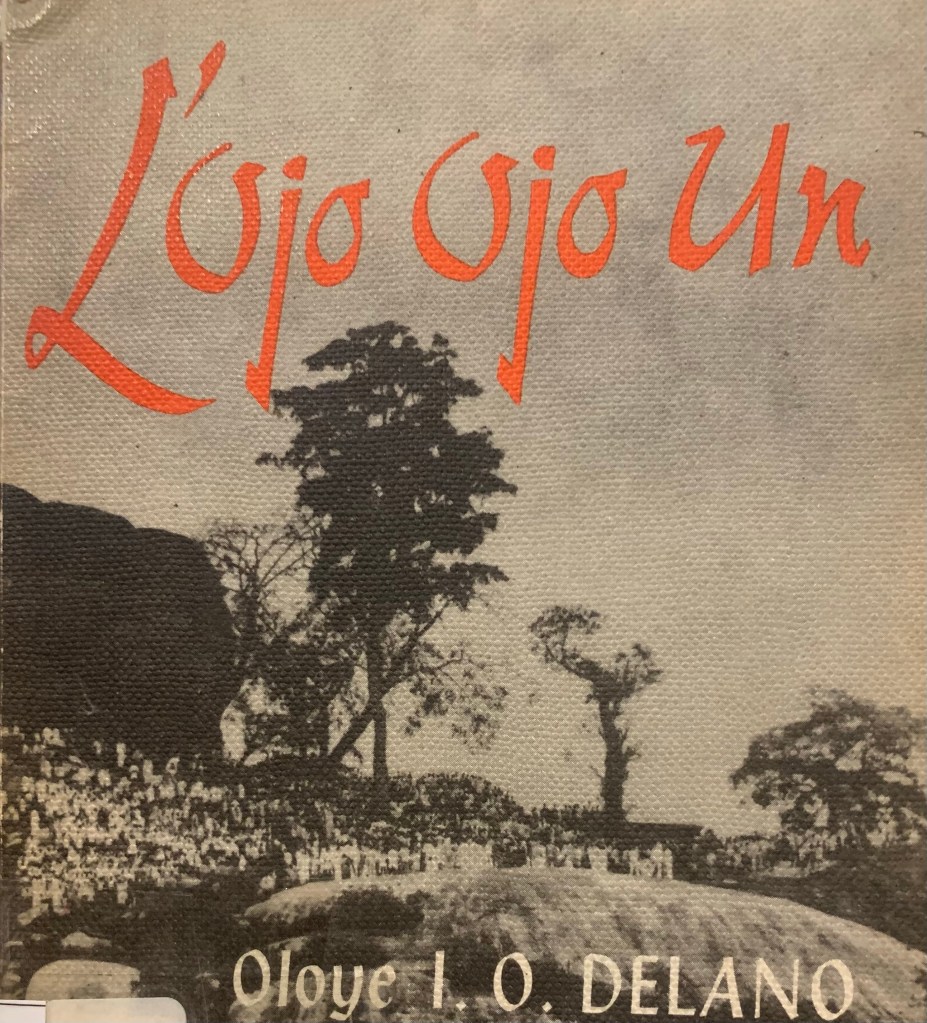
From the preface of Lojo Ojoun, we know that the author, Isaac Delano, wrote a historical account of the advent of British influence and its effects on the South West of Nigeria. British influence brought Ìlàjú, a word that could be translated “enlightenment”, “civilisation”, “refinement”. These are all possible meanings of Ìlàjú. We do know that the Yorubas had their own civilisation before the British turned up. Therefore, it will be patronising to say the British brought civilisation, enlightenment and refinement.
In the light of this, I believe Ìlàjú is synonymous with exposure to British style education and culture. Therefore I choose to interpret Òlàjú as a person who has been systematically exposed to the British education and culture.
It is sad to observe that the British convinced well educated people like Delano that the Yorubas were not civilised before the arrival of the British. I drew this inference from statements in Lójó Ojóun. For example in the preface, Delano referred to the British as “civilised”, contrasting them with the Yorubas. There are other examples in the book bu they will have to wait till another post in which I will focus on the theme of “òlàjú” and “Ìlàjú”.
Delano saw two components to “Western enlightenment”. Christianity and British style education was the first one. Both could not be separated because literacy training was delivered by the church and preists often doubled as teachers. The gospel preached and the education provided were all delivered in the framework of British culture.
The second component was the liquor business. With British influence came British merchandise, including cheaper and more intoxicating liquors.
While Christianity was considered an overall positive influence, liquor brought drunkenness. By 1909, the churches in Nigeria and England proposed to ban sale of alcohol in Nigeria.
Delano thought it was important to document how Christianity, literacy and the liquor trade came into the South West (first to Abeokuta, then to Lagos and later to the rest of South West). Another important issue he wished to record was the efforts of the clergymen of those days. Finally, Delano wanted to highlight the devastation that accompanied the British liquor trade, while highlighting the benefits of western education and Christianity.
From the preface, it was clear that Delano would be doing a critical appraisal of British influence, looking at the pros and cons; coming up with a judgment of whether overall, the influence of the British was good for South West of Nigeria.
Although, Lójó ojóun was a historical account of events in South Western Nigeria, it was written as fiction, apart from sections of the book that addressed the liquor trade.
Just as in “Ayé Dayé Òyìnbó” by the same author, It was a woman giving the account of events. Although the book was written in 1963, three years after Nigeria became independent, the narrator was considerably older, discussing historical events such as the death of Madam Tinubu in 1887, the building of a railway station at Aro in 1898 and the role that returned slaves (via Sierra Leone) played in local administration and governance in 1865. The interaction of the returned slaves with their brothers and sisters who never went into slavery deserves a separate post.

 oyebode.com
Please where or how can I buy a copy of the book lojo ojoun by oloye Delano
LikeLike
I don’t think the book is in print. I know there are copies at the School of Oriental and African Studies (SOAS), London and British Library. I borrowed a copy from SOAS.
LikeLike