
I once blogged on the spirituality of the Yoruba people of South West of Nigeria (read here). As I read again The African Child by Camara Laye, it is very clear the same statement was true of the people of Guinea of his time. In this post I do a quick sweep of the the various “manifestations of the spirit” in the book.
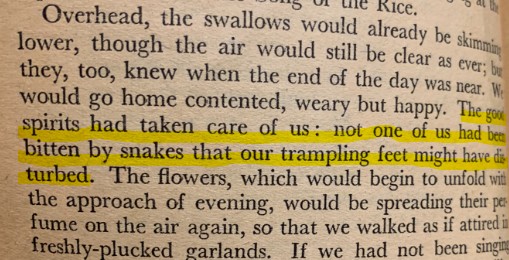
Doing a task as mundane as working on the farm required the help of the “spirits”:
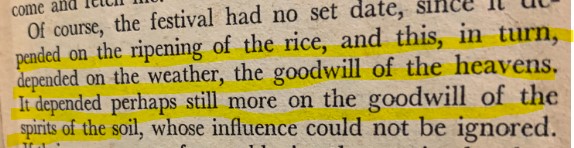
To know when to harvest, to have a good harvest, there is reliance on the “spirits of the soil”:
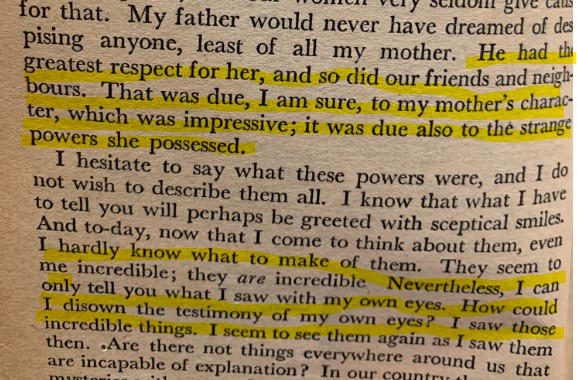
Camara Laye’s mother had supernatural powers, and he witnessed the display of these powers:
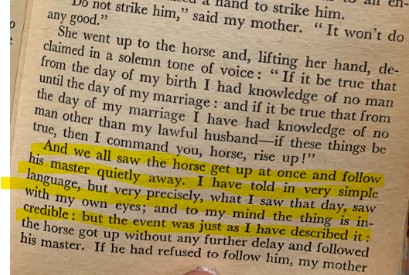
For example, she used her supernatural power to tame a horse:
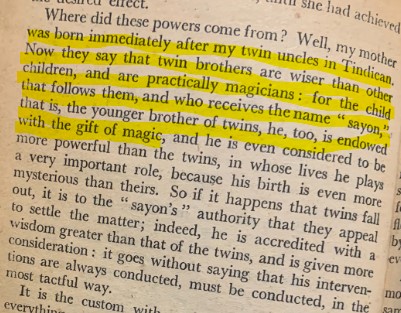
His mother’s supernatural power came from different sources. She was born after a set of twin and that meant Camara Layer’s mother was endowed with magical powers:
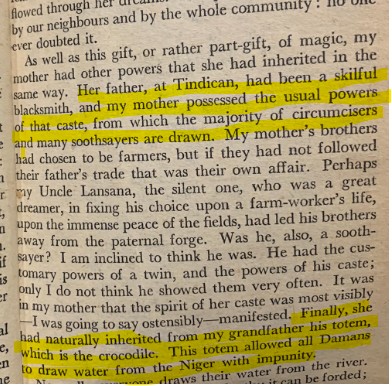
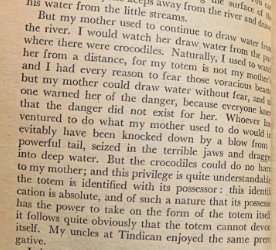
Laye’s mother also had some power from the family occupation and ancestry. Her father was a blacksmith, therefore, she has the gift of soothsaying. Moreover, the totem of his grandfather was the crocodile and that meant his mother can draw water from the Niger with impunity, regardless of abundance of crocodiles:
Laye provided examples of her mother’s display of these powers:
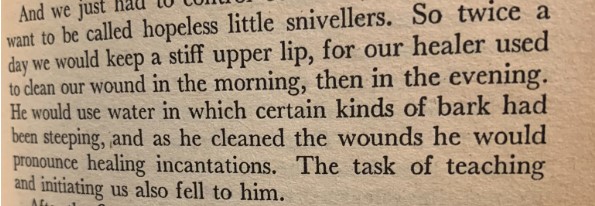
After Laye and his agemates were circumcised, they were in recuperation for a whole month. The healer came with herbs and incantations:
And when Laye was about to embark on a long journey to Conakry, it called for special sacrifices to ancestors’ spirits for protection:
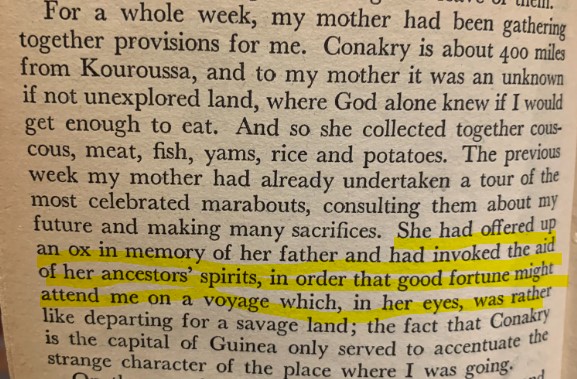
Laye’s mother was not going to just trust the safety of her son to just her ancestral spirits, she sought the help of Islamic marabouts:
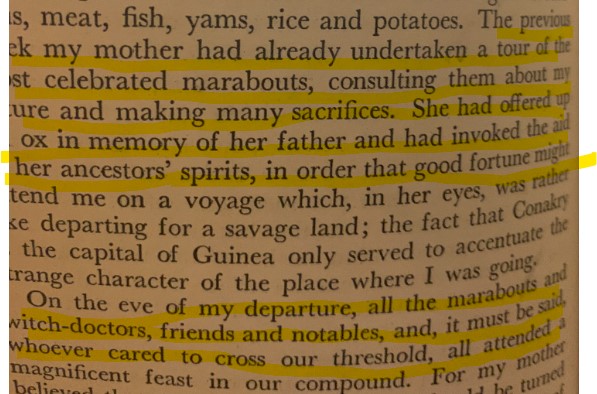
After eating and drinking both the marabouts and other visitors prayed for Laye, using different styles:

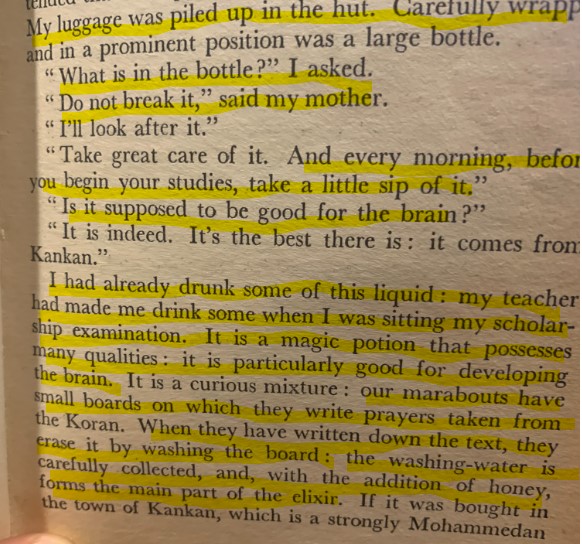
Camara Laye’s academic brilliance was taking him to Conakry but his mother had to provided some catalysts for her son’s success:
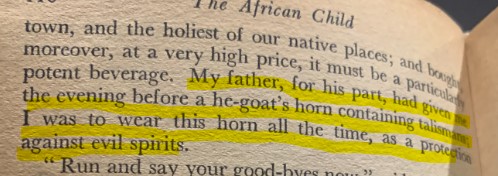
Camara Laye’s father also provided some “protection” against evil spirits for his son:
The “spirits” were everywhere. And looking at how we practice our Christianity today, they still are.

 oyebode.com